
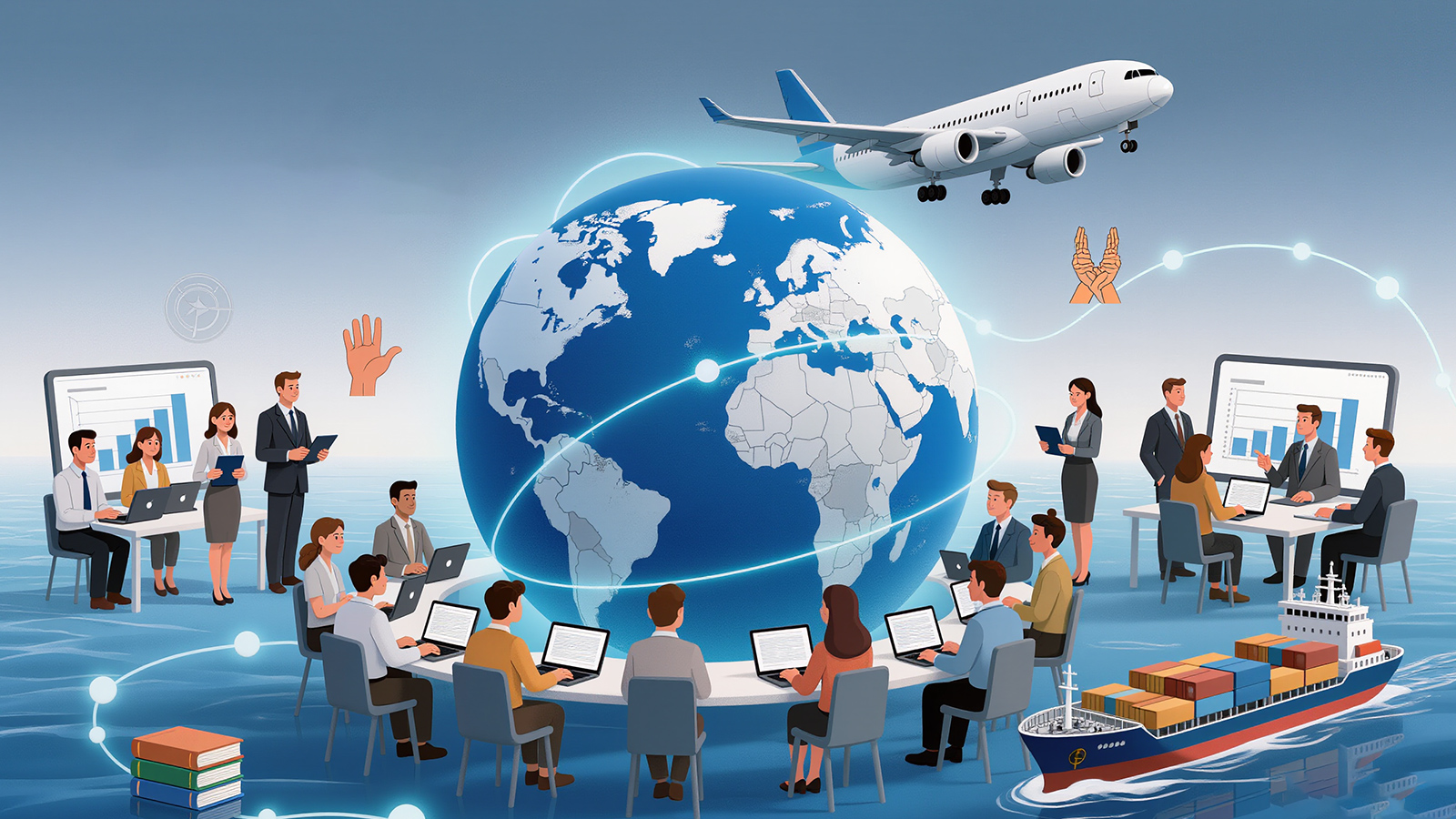
Globalization is one of the most talked-about topics in the entire world in modern society. Yet, many people come up and still ask the very simplest question: What is Globalization? And why does it really matter so much in today’s continually evolving world?
In simple terms, Globalization refers to the increasing interconnectedness of countries, business cultures, and people across the world. Advances in sectors like technology, communication, transportation, and trade have made it easier for different countries to come together in order to interact and depend on each other.
In this blog, we are going to have a look at what Globalization is and how it matters in today’s world.
Understanding Globalization
To clearly understand what exactly globalization is, just think about your everyday life and how it has changed in the past 10 years. There were some different products 10 years ago as they are now. The packages are different, the quality is different, and numerous other differences. And just think about the fact that the design part might be done in one country, manufactured in the other, and then it is sold globally. Even if you think about a professional setup, you can see how a business meeting happens online between professionals sitting in different parts of the world. Moreover, students can now earn international qualifications without leaving their home country. Programs like MBA in International Business prepare learners for global careers and real-world business challenges.
This is the result of the integration of economics, cultures, and knowledge. This is what defines globalization at its core.
Globalization in Today’s World
As much as globalization has changed in the past few years, so has the definition. It no longer refers to just trading. Globalization in today’s world influences not just education, employment, and healthcare, but also politics and social values. Companies now operate on a global scale that creates international job opportunities while also increasing the competition in the workforce.
When we talk about education, globalization has made international learning accessible to students around the world. Students can now pursue globally recognized degrees, interact with peers and professors coming from different parts of the world, and gain exposure that can help them cultivate global perspectives. These are some skills that are highly valued by today’s employers.
If we talk about culture, then globalization has allowed people to experience different traditions, ideas, and cultures altogether, which has given birth to some new lifestyles that people now adapt to. All of this encourages diversity and understanding. Sometimes it also raises concerns about one’s cultural identity and how it affects economic inequality.
In the end, globalization becomes a not-so-simple, complex topic and sometimes one of the most debated topics in the world.
Benefits and Challenges of Globalization
✅ Benefits
- Economic growth and access to global markets
- Innovation and technology transfer
- Knowledge sharing and global learning
- Exposure to diverse cultures and ideas
⚠️ Challenges
- Job displacement and wage inequality
- Environmental impacts
- Cultural homogenization
- Need for responsible governance and ethical practices
Globalization in today’s world requires a lot of balance that can embrace both opportunity and its impact responsibly.
These benefits and challenges highlight the complex nature of globalization. A detailed discussion on both sides can be found in our article on the positive and negative impact of globalization.
Why Globalization Matters
Understanding what globalization is helps not just individuals but also organizations in preparing for the future. Institutions like King’s Business School focus heavily on preparing their learners for the skills that are relevant in the globalized world and go hand-in-hand with global industry demands. Globalization is not just an economic trend; it is the defining force of how modern life proceeds and prepares for the future. Globalization in today’s world is the factor that defines how we learn, work, communicate, and grow.
FAQs About Globalization
Globalization means countries and people around the world are more connected through trade, technology, education, and communication.
Globalization helps economies grow, improves access to education and jobs, and promotes cultural exchange on a global scale.
The main effects include economic growth, cultural exchange, global job opportunities, and increased international competition.
Globalization has both benefits and challenges. While it boosts innovation and connectivity, it also creates issues like inequality and job displacement.
Globalization allows students to access international education and develop global skills. Programs like BBA in International Business offer structured learning for a competitive international career.